
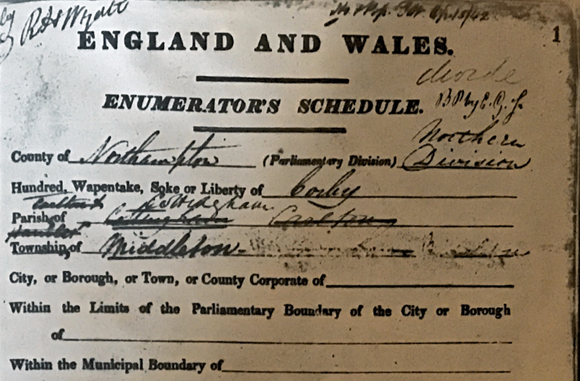
A Census has been collected in England and Wales every 10 years since 1801 (except 1941, during the second World War). The depth and type of information has varied, as has the method of collection. Well into the 20th Century, enumeration forms were distributed to all householders and an ‘enumerator’ collected these forms and copied them into enumerators‘ books.
Census Returns

Excel downloads
1801 Census
In 1801. the population of Cottingham and Middleton combined was 882. The population had more than doubled since 1524, when the two villagers were home to around 400 people.In 1801, the lowest weekly wage for regular employment in the area was two shillings a week (around £4.90 in today’s money) and the highest nine shillings and sixpence (around £22).
1841 Census
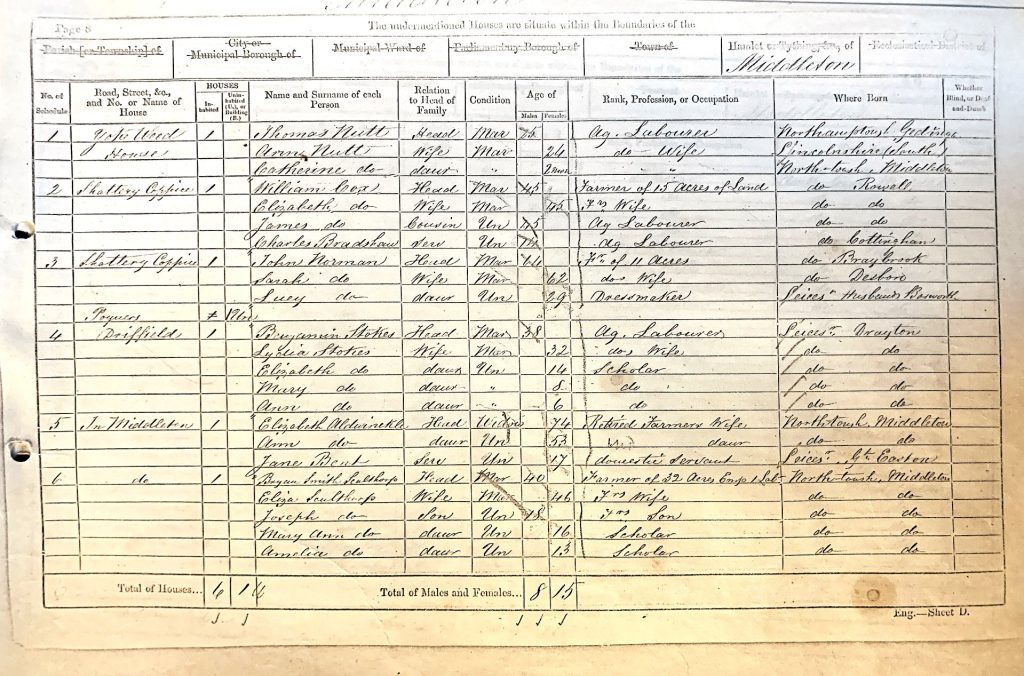
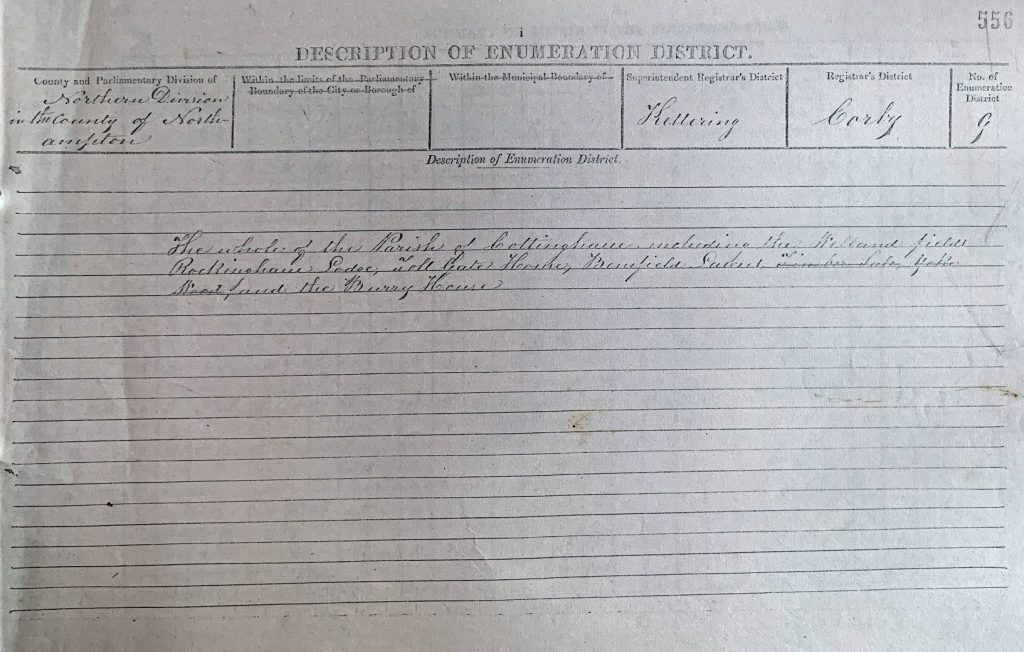
In 1841, the population of Cottingham was 623 and there were 411 people living in Middleton.
| Cottingham | Male | Female | Total |
|---|---|---|---|
| Population | 288 | 335 | 623 |
| Adults | 136 | 160 | 296 |
| Children (under 16) | 152 | 175 | 327 |
Most of the street names were different to today. Church Street was King Street, Water Lane was Church Lane and Corby Road was George Street and Priory Street.
The 1841 Census was the last to group parishes by Hundreds, but reference to Cottingham being in the Corby Hundred can be found as late as the 1914 Kelly’s Directory.
84% of working males were employed in farming and agriculture with only 11% of females working, almost exclusively in domestic service. There were ten 15 year olds working – six as servants, one apprentice and two agricultural labourers – and 12 year old Comfort Tansley worked as a live-in servant for John Claypole, publican at the Three Horseshoes Pub on Cottingham High Street.
1881 Census
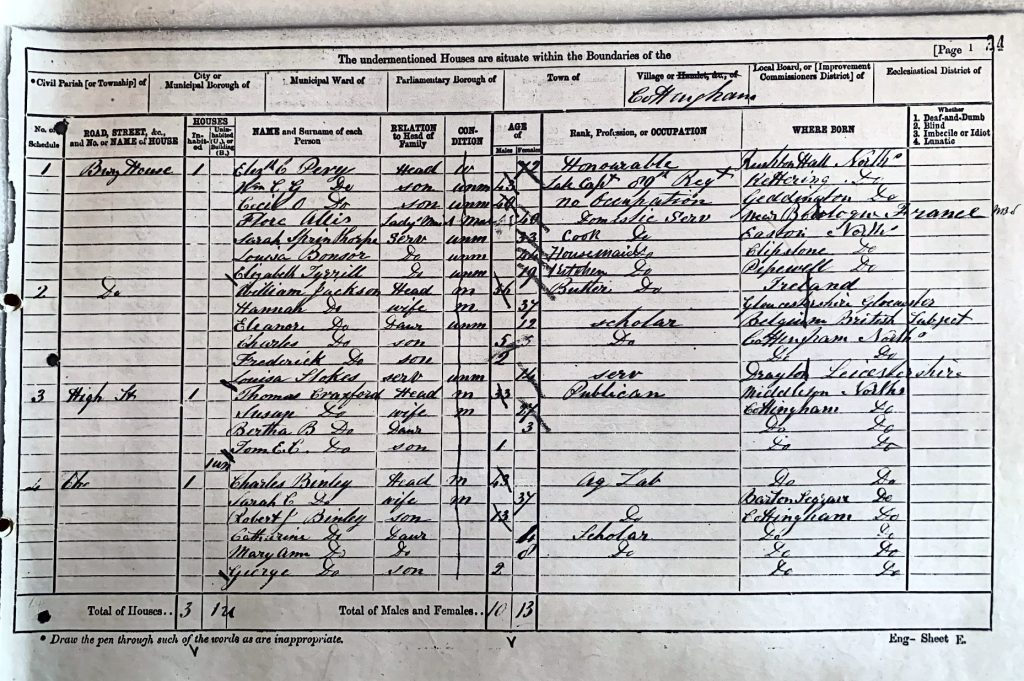
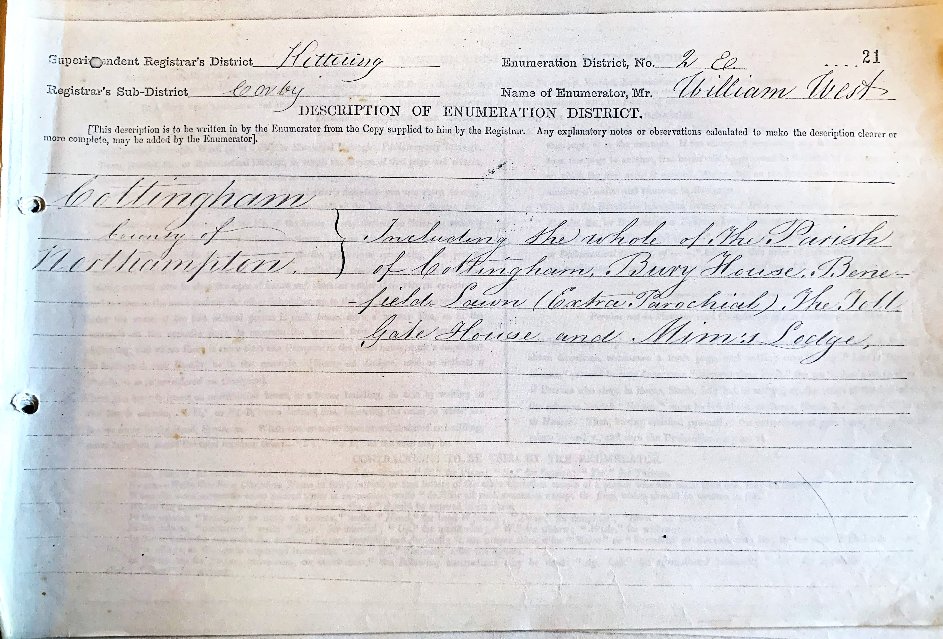
In 1881, there were 631 people living in Cottingham and nearly three quarters (70%) of the villagers were born in Cottingham.
| Cottingham | Male | Female | Total |
|---|---|---|---|
| Population | 319 | 312 | 631 |
| Adults | 183 | 185 | 368 |
| Children (under 16) | 136 | 127 | 263 |
1901 Census
In 1901, the population of the village of Cottingham had reduced slightly to 519, with 293 people in the Hamlet of Middleton.• The average age was 32 for males and 28 for females.
| Cottingham | Male | Female | Total |
|---|---|---|---|
| Population | 253 | 266 | 519 |
| Adults | 161 | 181 | 342 |
| Children (under 16) | 92 | 85 | 177 |
The main source of income for Cottingham villagers remained farming and agriculture, with more than half of the men in the village working on the land.
By this time, other common occupations for village men were the local ironstone pits, brick making and gardening. The single women who went out to work were employed mainly as tailoresses and machinists at the Wallis and Linnell clothing factory, which opened on Rockingham Road in 1874. or as domestic servants, but not one of the married women in Cottingham went out to work. How times change!or as domestic servants. However, not one of the married women in Cottingham went out to work. How times change!
The census also records 14 children aged between 13 and 15 going out to work. All aged 13, John Cook was employed as a page boy at The Rectory, Annie Jarvis as a tailoress at the clothing factory and William Claypole worked on his dad’s farm. 14 year old Fred Pauler worked as a clerk at the clothing factory.
There were 12 employers living in Cottingham – eight farmers, a builder, a stone mason, a baker and a publican. 34 people were self employed, of which 17 worked from home. Occupations included tailor/dressmaker, laundress, shoe and boot maker, baker and carpenter/wheelwright.
The final entry for Cottingham in the 1901 Census is for the Fendick family, recorded as ‘Corby Road, sleeping on land with steam round-abouts‘, with the head of the family, William Fendick from Norfolk, working on his own account as ‘proprietor of Steam Horses’. This most likely refers to a travelling steam powered carousel, which were around at the turn of the 20th Century. As the Fendick’s census return was not collected at the same time as the rest of Corby Road, we can deduce that this was located further up the road, away from the centre of the village.
2001 Census
Here are some key statistics from the 2001 Census for Corby’s rural west ward (Cottingham, Middleton and East Carlton):
- 84% of houses were owner occupied, with the remainder being rented
- the average number of rooms in each house was 6.3
- Only 2% didn’t have central heating
- All had sole use of a bath, shower or toilet
- The average age of the population was 43.6
- 62% of adults were married or remarried, 19% were single, 7% divorced, 1% separated and 11% widowed.
- The average household size was 2.4
- 23% of adults had no qualifications, and 22% were educated to degree level or higher
- 22% lived alone, and 30% contained dependant children
- 11% didn’t own a car or van, but more than half (51%) owned two or more
Figures rounded to nearest whole number
In 2001, the estimated population for Cottingham was around 910.